
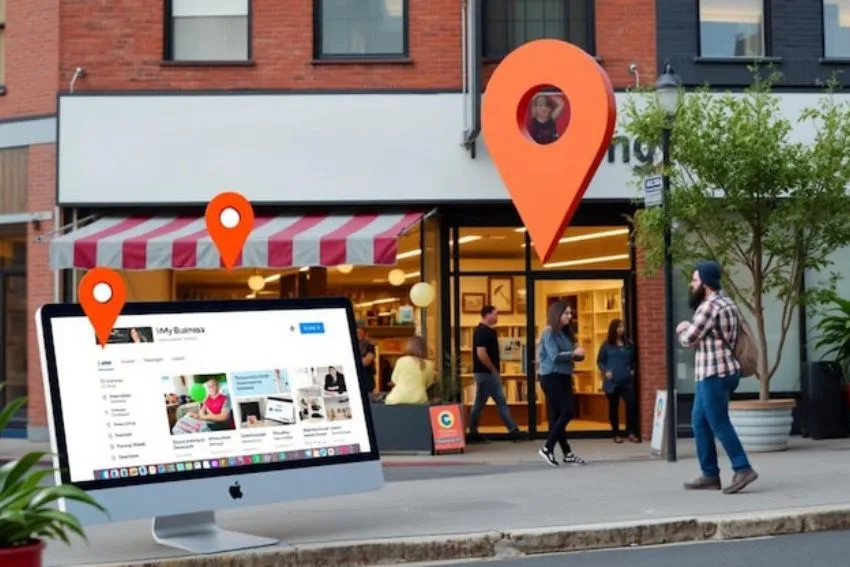
Let me ask you something direct: when did you last search for a product or service on Google before buying it?
Chances are — it was recently. Maybe even today.
That’s exactly what your customers are doing right now. They’re searching for businesses like yours. The question is: are you showing up?
As the founder of Social M3, a digital marketing agency based in Pune, I’ve worked with dozens of small and medium business owners across India. And the single most common regret I hear from them is: “I wish I had started SEO sooner.”
This blog is for every business owner who’s been told SEO is important but never truly understood why — or what happens when you don’t have it.
What exactly is SEO, and why does it matter for small businesses?
SEO, or Search Engine Optimization, is the process of making your website more visible on Google when people search for products or services you offer. But it’s more than a technical exercise — it’s the foundation of sustainable online growth.
Think about this: organic search drives over 53% of all website traffic, making it the single largest source of visitors across industries. Yet over 90% of web pages receive zero organic traffic at all. That gap exists because most businesses either haven’t invested in SEO or have done it inconsistently.
For small businesses especially, this matters enormously. You don’t have the ₹5–10 lakh advertising budgets of large brands. What you do have is the ability to be found organically — consistently, credibly, and without paying for every single click.
Does SEO really help small businesses compete with bigger companies?
Yes — and this is one of the most empowering truths about SEO.
A well-optimized website from a small Pune-based business can outrank a national brand for the right keyword. Google doesn’t rank websites by company size or budget. It ranks them based on relevance, quality, and authority — all of which any business can build over time.
Here’s what that looks like in practice:
- A home interior designer in Kothrud who consistently publishes helpful content and optimizes for “interior designers near me” can rank above a bigger firm that has a flashy website but no SEO strategy.
- A coaching class in Hadapsar that builds a Google Business Profile and collects genuine reviews will appear in local searches that parents are making on their phones right now.
- A boutique accounting firm in Viman Nagar that answers real client questions through blog content will show up in Google’s AI Overviews — putting them right in front of high-intent prospects.
SEO levels the playing field in a way that almost no other marketing channel does.
How does SEO bring in customers without paid advertising?
This is the core value proposition of SEO — and it’s why I always tell clients it’s one of the smartest long-term investments a small business can make.
When you run Google Ads or Meta Ads, you pay for every click. The moment you stop spending, the traffic stops. It’s like renting visibility. SEO, on the other hand, is like owning it.
Organic leads convert at 14.6% — compared to just 1.7% for outbound methods like cold calls or display ads. That’s not a small difference. It means the people who find you through search are already looking for what you offer. They arrive pre-qualified, ready to engage.
The way it works:
- Someone searches “affordable web designer in Pune” on Google
- Google crawls and ranks pages based on relevance, authority, and quality signals
- Your website — if properly optimized — appears on page one
- The visitor clicks, reads your content, trusts your brand, and contacts you
- You close a client without spending a rupee on ads for that lead
This cycle compounds over time. A blog post you write today can bring in leads for the next three to five years.
What are the real business benefits of SEO beyond just rankings?
Rankings are a metric. Business growth is the goal. Here’s what SEO actually delivers for small businesses:
Increased Visibility and Brand Awareness
When your business shows up consistently in search results — for questions, product searches, and local queries — people begin to recognize your name even before they need you. That’s passive brand building at zero ongoing cost.
Trust and Credibility
Customers trust Google. And when Google puts your business on page one, it’s essentially endorsing your relevance and quality. Businesses that rank well are perceived as more credible, more established, and more worth trusting. This is backed by Google’s own E-E-A-T framework (Experience, Expertise, Authoritativeness, Trustworthiness) — which it uses to evaluate content quality.
Lower Customer Acquisition Cost
Compared to paid ads, SEO dramatically reduces what you spend to acquire each customer. One well-optimized service page can deliver leads for years. One well-written blog post can answer the exact question your next customer is asking — and bring them straight to you.
Better Website Experience
Good SEO forces you to have a fast, mobile-friendly, well-structured website. And that benefits not just Google rankings but every visitor who lands on your site. Your website design and SEO are deeply connected — one reinforces the other.
Long-Term, Compounding Growth
Unlike any paid channel, SEO compounds. The more content you create, the more backlinks you earn, the stronger your domain authority grows — and the easier it becomes to rank for new keywords. Businesses that commit to SEO for 12–24 months routinely see 3–10x growth in organic traffic.
How does local SEO specifically help small businesses in India?
Local SEO is a game-changer for service-based businesses, retailers, clinics, coaches, and anyone who serves a specific geography.
46% of all Google searches have local intent. People aren’t just searching for “digital marketing agency” — they’re searching for “digital marketing agency in Pune” or “social media manager near me.” And 76% of people who search for a local business visit or contact that business within 24 hours.
The core of local SEO for Indian small businesses involves:
- Google Business Profile (GBP) optimization — Your GBP listing is what appears in Google Maps and local search packs. A complete, accurate, and regularly updated profile is one of the highest-ROI things you can do for free.
- Location-specific keywords — Integrating city names, neighbourhood names, and region-specific terms into your website content.
- Online reviews — Consistent, genuine Google reviews build ranking authority and customer trust simultaneously.
- Local citations — Getting listed on platforms like JustDial, Sulekha, and IndiaMart with consistent Name, Address, and Phone details.
A dental clinic example says it well: businesses in Pune that invest in local SEO — optimizing their Google Business Profile, building reviews, and publishing local content — have seen dramatic jumps in appointments and enquiries within just a few months. The investment is modest. The returns are real.
Is SEO better than running paid ads for a small business?
This comes up constantly, and the honest answer is: they serve different purposes, and the best strategy often uses both.
SEO | Paid Ads (Google/Meta) | |
Results timeline | 3–6 months | Immediate |
Cost per click | Free (organic) | Pay per click |
Longevity | Compounding, long-term | Stops with budget |
Trust factor | High (organic positioning) | Lower (marked as Ad) |
Best for | Sustained growth | Quick lead bursts |
If you’re launching a new product or running a time-sensitive promotion, paid ads make sense. But if you want consistent, affordable, and trust-building visibility over the long run — SEO is unmatched.
At Social M3, we help clients combine both intelligently: using SEO as the foundation and paid ads (Google & Meta) as a booster for specific campaigns. Content marketing and social media marketing further support the SEO ecosystem by driving traffic, building authority, and keeping your brand visible across platforms.
How long does SEO take to show results for a small business?
Patience is the one thing SEO genuinely requires.
Most small businesses begin to see measurable movement in rankings and traffic within 3–6 months of consistent effort. Significant, business-changing results typically take 6–12 months. And the businesses that stay committed beyond 12 months are the ones who see truly compounding growth.
This timeline is not a weakness of SEO — it’s a feature. Because the results that come slowly through SEO are also the results that stay. You’re building digital assets, not renting attention.
What accelerates results:
- Starting with a technically sound, fast, mobile-friendly website
- Publishing quality content consistently
- Optimizing your Google Business Profile
- Building genuine backlinks
- Fixing crawl and indexing errors early
If you work with a professional SEO partner who understands your market, timelines shorten. At Social M3, our SEO strategy for Pune-based businesses is always built around specific business goals — not vanity metrics like keyword position alone.
FAQ: Real Questions Business Owners Ask About SEO
Q1: Can a small business do SEO on its own, or does it need an agency?
You can absolutely learn and apply the basics yourself — setting up Google Search Console, optimizing your Google Business Profile, and writing helpful blog content. But for competitive markets or faster results, a professional SEO partner brings tools, experience, and strategy that are hard to replicate without a significant time investment.
Q2: How much does SEO cost for a small business in India?
SEO packages in India typically range from ₹8,000 to ₹50,000 per month depending on the scope, competition, and goals. Starter packages covering local SEO, on-page optimization, and content usually fall in the ₹8,000–₹20,000 range. Think of it as a monthly investment — not an expense — because the ROI compounds over time.
Q3: Does having a social media page replace the need for SEO?
No. Social media and SEO are complementary, not substitutes. Social media builds community and drives short-term engagement. SEO builds long-term organic visibility on Google. A customer ready to buy will almost always search Google first. You want to be there when they do.
Q4: Does my website design affect my SEO?
Absolutely. A slow, non-mobile-friendly, or poorly structured website will hurt your rankings regardless of how good your content is. Google rewards fast-loading, responsive, easy-to-navigate websites. Your website design and your SEO strategy must work together — which is why we always approach them as one at Social M3.
Q5: What happens to a small business that ignores SEO?
Simply put — competitors fill the space. Every month you don’t invest in SEO is a month a competitor builds authority you’ll have to work harder to overcome later. Over 90% of websites receive zero organic traffic from Google. Ignoring SEO means staying invisible to the customers who are actively looking for what you offer.
Conclusion: SEO Isn’t Optional Anymore
If your customers are online — and they are — then the question isn’t whether you need SEO. The question is how quickly you’re willing to start.
SEO for small businesses isn’t about chasing algorithms or stuffing keywords into pages. It’s about being genuinely helpful, consistently visible, and trustworthy in the eyes of both Google and your customers. It’s about building a digital foundation that works for your business 24/7 — long after your ad budget has run dry.
Whether you run a service business in Pune, a startup looking for early traction, or a growing SMB trying to reduce dependence on paid marketing — SEO is the most durable growth channel available to you right now.